How India can protect it’s tech supermacy, economic growth and strategic autonomy in the global power race
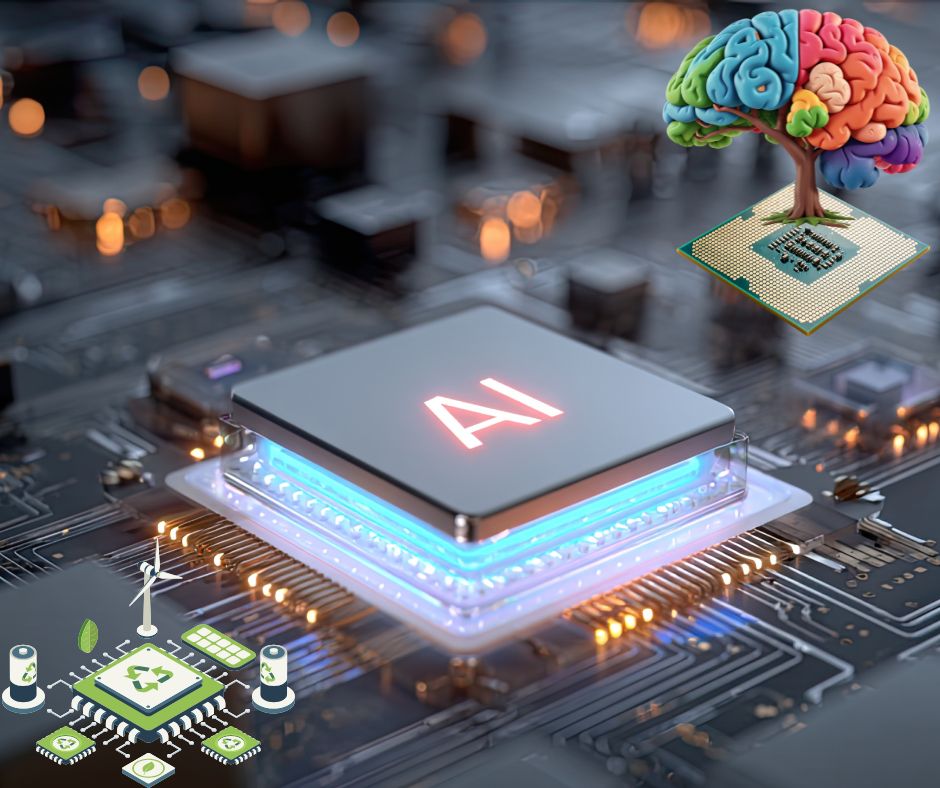
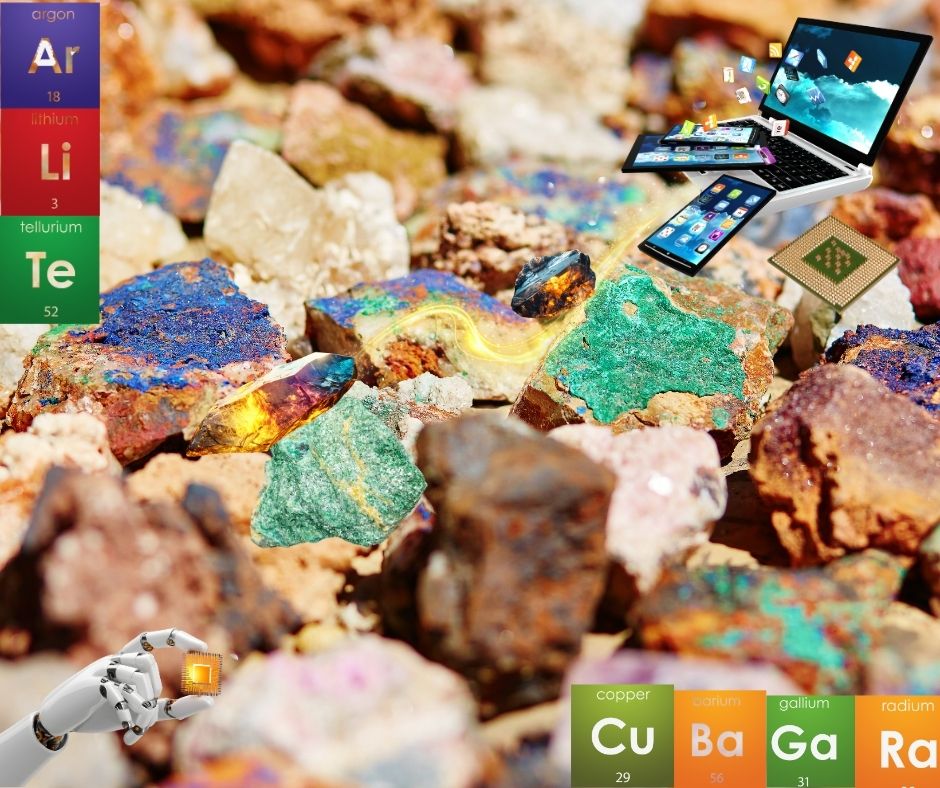
The 21st century isn’t powered by oil — it is powered by semiconductor chips & critical minerals.
They are the fuel and foundation of AI, 5G, cloud computing, EVs, satellites, defense tech — everything shaping modern life. For India, they are more than just components. They represent: Economic growth, Technological transformation, A.I & Quantum supremacy, National security, Strategic autonomy in a volatile world India is stepping into a new era — one powered by Artificial Intelligence, electric mobility, Industry 4.0, space-grade innovation, the Silicon heart of smartphones to supercomputers driving space missions. But behind this ambitious transition lies a question more powerful than any algorithm: Who controls the raw power that drives technology? Because without chips and minerals — AI can’t think, Data centers can’t compute, Electric vehicles can’t move, Defense could not develop.
Why Chips & Minerals Matter to India’s Economic Future
Twin Engines of India’s Tech Transformation
1- Semiconductors fuel every layer of India’s digital economy, From UPI transactions to ISRO’s satellites, semiconductors are the intelligence chips inside everything smart. As AI systems expand, chip demand skyrockets. 5G & future 6G technology, Automotive sector: Electric vehicles, Flights, Defense & secure communication, Advance Health facilities, AI servers, GPUs & supercomputing all run through semiconductors. They are brains of the modern economies’ tech infrastructure.
2- Critical Minerals — The raw muscles of technology & core to: Circuit wiring, Sensors & magnets (Neodymium, Dysprosium), Batteries (Lithium, Nickel), Green energy (Cobalt, Rare Earths), Base of all semiconductor’s running devices, Without these elements, factories stop, Data stops, AI stops — and ambitions collapse. India’s $1 trillion digital economy target by 2030 depends on them.
These two aren’t just resources, they’re strategic weapons in the race for technological leadership & global super power.
Semiconductors and Minerals: The New Geopolitical Battleground
The US and China are battling to control them:
- Washington has launched the CHIPS & Science Act , blocking China’s access to advanced chip manufacturing.
- China retaliated with export controls on Critical minerals, essential for all electronics, chips, and EV batteries.
- Japan, Australia, and the EU are investing billions to break dependence on China’s mineral dominance.
- The USA is re-routing supply chains via India, Vietnam, and allies in the “Chip 4” network ( a strategic grouping of the United States, Japan, Taiwan, and South Korea to strengthen the global semiconductor supply chain ).
- China Controls more than 70% of global rare-earth processing, Now expanding chip manufacturing aggressively, Uses export restrictions as geopolitical leverage.
- United States dominates advanced chip design (NVIDIA, Qualcomm, Intel), Invested $52+ billion via the CHIPS Act to beat China, restricts cutting-edge tech access to Beijing and now pushing Taiwan Semiconductor Manufacturing Company Limited (TSMC or Taiwan Semiconductor) to shift it’s manufacturing unit in America.
Why this matters for India’s AI Advantage
India’s AI revolution is accelerating, 6th largest AI startup hub globally and Data centers growing at 40% annually But here’s the plot twist – AI is a hungry beast, It needs more chips, more batteries, more minerals than any technology in history. Without stable access to both: Faster AI? → Not possible, Defense modernization? → Delayed, Clean energy transition? → Weak, Economic growth? → Slower. This is why India now sees mineral security and chip independence as non-negotiable for national power.
As Prime Minister Narendra Modi said at Semicon 2025:
“Oil was black gold, but semiconductor chips are digital diamonds. The last century ran on oil, now it runs on chips.”
— PM Narendra Modi
He also highlighted that $18 billion has already been committed into India’s semiconductor ecosystem since 2021 — a sign that the world trusts India to build the future of tech.
India’s Strategic Response: Three Fronts of Action
- Mine & refine at home : India has recently discovered- 5.9 million tonnes of lithium in Jammu & Kashmir, Rare earth potential in Andhra Pradesh & Tamil Nadu. Mining is no longer an industrial plan — it’s a national mission.
- Build semiconductor self-reliance : In 2021: Union Cabinet approved the India Semiconductor Mission (ISM) with a ₹76,000 crore outlay to boost fabrication, design, and manufacturing. 2023–2025: Rapid setup of major facilities by domestic and foreign firms with significant investments. Total approved projects under ISM reaches to 10 with cumulative investments of around Rs.1.60 lakh crore in 6 states.
- Global alliances for supply security : Because no single nation has everything, Rare earth cooperation with South America (Argentina, Bolivia, Chile), Africa and with many other nations is crucial.
India has made remarkable progress in strengthening its semiconductor ecosystem, driven by the vision of Aatmanirbhar Bharat, propelling the country towards technological leadership and reduced import dependence.
India’s Big Goal: From Assembly Line to Powerhouse
Instead of being: “The world’s biggest market for tech” India wants to be: “The world’s biggest maker of tech. ”Not just assembling chips, Not just importing EV batteries. But designing, fabricating, mining, refining, and exporting the foundations of the global economy. Semiconductors give India speed, Critical minerals give India strength, Together, they give India External sovereignty(A state’s independence and freedom from external control, especially in its foreign policy and relations with other states).
Digital Sovereignty = Power in the 21st Century
Today, data is the new oil — but data is useless if you can’t compute it. That requires: Chips to process intelligence & Minerals to build intelligence. Whoever controls these — controls the machines — controls the future. Cloud and data centers, UPI-like global digital models, AI innovation, Smartphones, laptops, telecom gear all digital system useless without these two. India understands that technological supremacy cannot be rented; it must be built and owned.
India Cannot Afford Dependency : India imports 100% of its semiconductor chips today. That creates risks of –
- Supply chain disruption
- Cost & inflation pressures
- Vulnerability to global politics
- Weakens the industrial growth
This is why semiconductor chips and critical minerals in India are not just industrial needs — they are strategic assets shaping national power. AI cannot run without semiconductor chips, and those chips cannot be produced without critical minerals. If semiconductors are the oil of the digital world, then critical minerals are the soil — the foundation where India grows its technological and economic strength. One powers intelligence; the other enables its creation. Together, they are like blood & bone to AI and emerging technologies
Self-reliance = stronger Indian economy, strengthens national security & strategic autonomy.
Conclusion: India’s Tech Destiny Depends on Resources
Semiconductor Chips & Critical Minerals are: The fuel & foundation of digital India, The engine of AI & Tech Industry, The shield of national security, The power source of India’s global positioning. All depend on how strongly we secure these two strategic assets. India’s future strength lies in mastering Semiconductor Chips & Critical Minerals — the foundation of a resilient Indian economy and AI future.
“You may find this useful: India’s Digital Economy Is Growing Faster Than Its Users: Insights for 2025–30
Pingback: Indian Cars vs Foreign Cars in 2026: Why Tata, Mahindra & Maruti Are Winning - BharatTechBusiness.com