Introduction
As global geopolitics turns unpredictable—with recent U.S. sanctions, tariff wars, unilateral actions on other nations(causing damage to their economy) and increasing digital dependency on America – has left many nations worrying at uncomfortable question: Should our economic and technological future rely entirely on American Big Tech? In this environment, India, home to one of the world’s fastest-growing digital populations, is starting to script its own answer. This move toward digital sovereignty—the power to control and secure one’s digital ecosystem—is now more than policy talk.
It’s an emerging strategy. And at the center of this Indian movement stands Zoho Corporation, an Indian tech powerhouse daring to challenge the dominance of Meta, Microsoft, and Google.
What Is Digital Sovereignty?
Digital sovereignty means a nation’s ability to control, manage, and secure its own data, software, and digital technology infrastructure—free from external dependency.
For India, it’s about:
- Owning & Securing its digital future,
- Protecting user data from foreign surveillance, and
- Empowering local innovation and businesses rather than feeding global monopolies.
- Strengthens defense against hacking, espionage, Minimizes disruption during geopolitical tensions
- Reduces dependency on foreign tech companies that may have political influence & Prevents external manipulation (elections, misinformation)
It’s not anti-globalization—it’s strategic independence in the digital era.
Zoho: The Face of India’s Digital Independence
Headquartered in Chennai, Zoho has quietly built one of the world’s most complete software ecosystems:
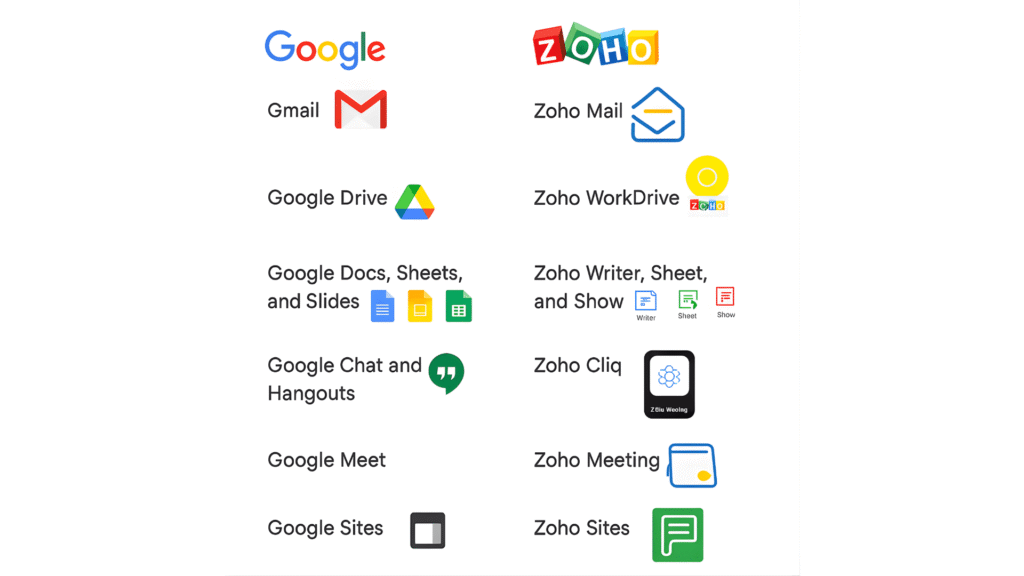
- Zoho Mail – An alternative to Gmail and Outlook.
- Zoho WorkDrive – Cloud storage rivaling Google Drive.
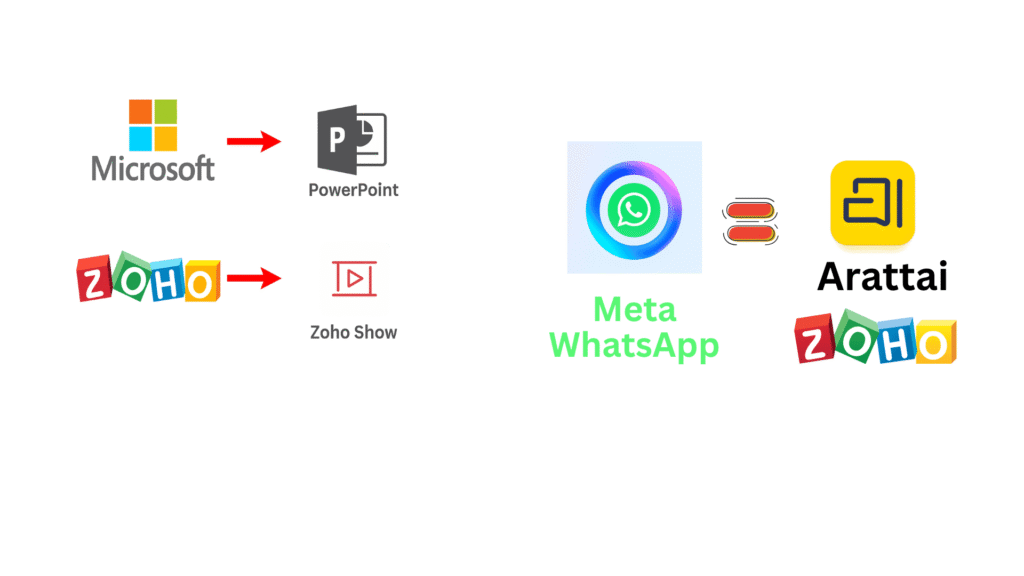
- Zoho Show – Presentation software taking on Microsoft PowerPoint.
- Arattai – A privacy-focused messaging app developed as an Indian alternative to WhatsApp.
What makes Zoho unique is its completely self-funded model—no foreign venture capital, no dependency on Silicon Valley investors.
That independence itself embodies the spirit of India’s digital sovereignty.
The Challenges Before Zoho
1- Brand Perception & Awareness
Most users still see Microsoft, Google, and Meta as default choices.
Zoho’s products are world-class—but awareness among common users is limited.
2- Network Effect of Big Tech
Meta’s apps (WhatsApp, Instagram, Facebook) dominate communication.
Breaking into that ecosystem requires not just quality—but mass migration of habits.
3- Pricing Pressure & Free Models
Google and Microsoft offer “free” versions supported by ads or bundles.
Indian users often prefer free tools, making Zoho’s paid model harder to scale.
4- Trust & Data Narrative
While Zoho champions privacy and “Made in India” ethics, it needs aggressive storytelling to make users care about data sovereignty.
5- Talent & Ecosystem Scale
Competing with trillion-dollar giants requires deep R&D funding, developer ecosystems, and marketing muscle.
Zoho’s growth, though steady, is still organic and slower by design.
6- Integration Gap
Google and Microsoft tools work seamlessly across devices and platforms.
Zoho’s ecosystem is strong but not yet the default workplace standard for enterprises worldwide
7. AI Integration and Global Competition
While global giants like Microsoft, Google, and Meta are heavily investing in AI copilots, assistants, and automation, Zoho’s pace in integrating advanced AI is slower.
Big Tech firms are embedding AI into every user experience — from Gmail’s Smart Reply to Microsoft 365’s Copilot.
Zoho, though developing its own AI called Zia, faces an uphill task in:
- Matching global AI research budgets,
- Keeping up with rapid model updates, and
- Training data at scale while respecting privacy laws.
The Road Ahead: What India Can Do
For India’s dream of digital sovereignty to become real, both government and consumers must contribute.
Here’s what can help companies like Zoho grow:
- Policy Support – Government procurement of Indian software for ministries, schools, and enterprises.
- Tax Incentives – Encouraging businesses to adopt local cloud and productivity tools.
- National Awareness – Promoting Indian apps through campaigns like “Digital Bharat, Secure Bharat.”
- Collaboration Over Isolation – Indian tech firms should integrate APIs and platforms to create a unified ecosystem.
- Skill Development – Training programs to make Indian workforce fluent in homegrown software.
Conclusion
India’s move to digital sovereignty isn’t about cutting off the world—it’s about ensuring that the nation’s innovation, privacy, and data are not controlled by a handful of global corporations.
Zoho’s journey—though filled with challenges—is symbolic of India’s larger ambition:
To create, own, and sustain technology that reflects Indian values, innovation, and independence.
In the coming decade, Zoho may not replace Meta, Microsoft, or Google overnight—but it has already done something far more important:
It has made Indians believe that we can.