अब “प्रीमियम कार” का सपना सिर्फ विदेशी ब्रांड्स तक सीमित नहीं रहा।
2026 में विदेशी नहीं… देसी कारें जीत रही हैं — वजह जानकर आप हैरान रह जाएंगे!
मिडिल क्लास का सपना अब सच है: लग्ज़री फील, बजट प्राइस।
देसी बनाम विदेशी: असली जीत किसकी है?
ये सिर्फ कारों की लड़ाई नहीं… ये भारत की आर्थिक ताकत की कहानी है।
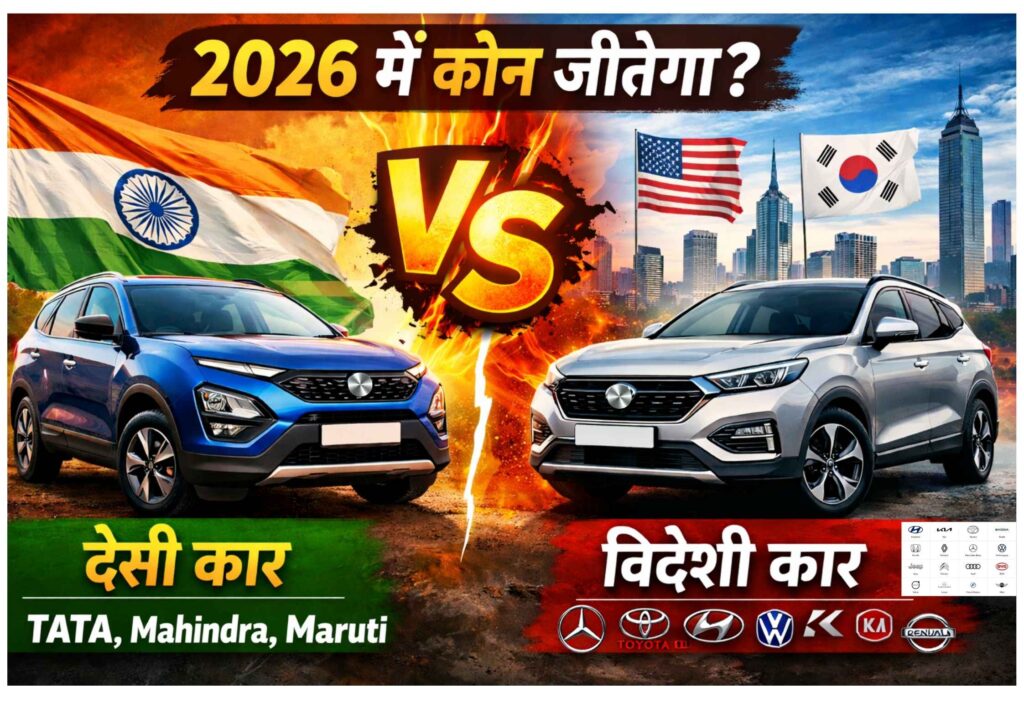
अगर आप 2026 में नई कार लेने की सोच रहे हैं, तो एक बात तय है—अब फैसला सिर्फ “ब्रांड” देखकर नहीं होगा। आज Tata, Mahindra और Maruti जैसी भारतीय कंपनियाँ SUV लुक, फीचर्स, रोड प्रेज़ेंस, कम मेंटेनेंस और बेहतर इंडियन-रोड ट्यूनिंग के दम पर कई सेगमेंट में विदेशी ब्रांड्स को टक्कर नहीं… सीधी चुनौती दे रही हैं। चलिए बिना किसी झूठे दावे के, बिल्कुल रियल-लाइफ ओनरशिप के हिसाब से समझते हैं कि देसी कारें क्यों आगे निकल रही हैं।
The 7 Big Reasons Indian Cars Are Winning in 2026
1) वैल्यू फॉर मनी: उसी बजट में ज़्यादा फीचर्स
Let’s keep it simple: भारत में सबसे बड़ा फैक्टर है: “पैसे के बदले क्या मिल रहा है?”
- bigger infotainment screens
- more variants
- SUV stance + ground clearance
- connected features
- better “feature-to-price ratio”
Foreign cars are often excellent — जबकि कई विदेशी कारों में यही चीजें: टॉप वेरिएंट में मिलती हैं या “एक्स्ट्रा पैकेज” बनकर महंगी पड़ती हैं making the final value weaker for price-sensitive Indian families. सीधी बात: देसी ब्रांड्स ने मिडिल क्लास की नब्ज़ पकड़ ली है।
2) Built for Indian Roads (Foreign brands adapt; Indian brands are born here)
Indian roads aren’t “roads.” They are test tracks. Indian engineering advantage:
- high ground clearance tuning
- tougher suspension setup
- more underbody protection
- stronger cooling system focus
विदेशी ब्रांड्स की कई कारें ग्लोबल कंडीशन के हिसाब से बनती हैं और बाद में इंडिया में “लोकलाइज़” होती हैं। That is why in India:
3) Ownership Cost: असली गेम (जो खरीदते समय लोग भूल जाते हैं)
This is where foreign brands lose many buyers after 12–18 months. कार का असली खर्च खरीद के बाद शुरू होता है: सर्विस + स्पेयर पार्ट्स + रिपेयर टाइम + रीसेल
Indian brands usually win on:
- cheaper spares
- easier repairs
- better availability outside metros
- stronger service networks (Maruti especially)
FOMO line (truthful): बहुत लोग बाद में कहते हैं— “कार तो बढ़िया थी, लेकिन मेंटेनेंस ने दिमाग खराब कर दिया।”
👉 Many buyers regret later when a “premium foreign car” becomes a premium maintenance bill.
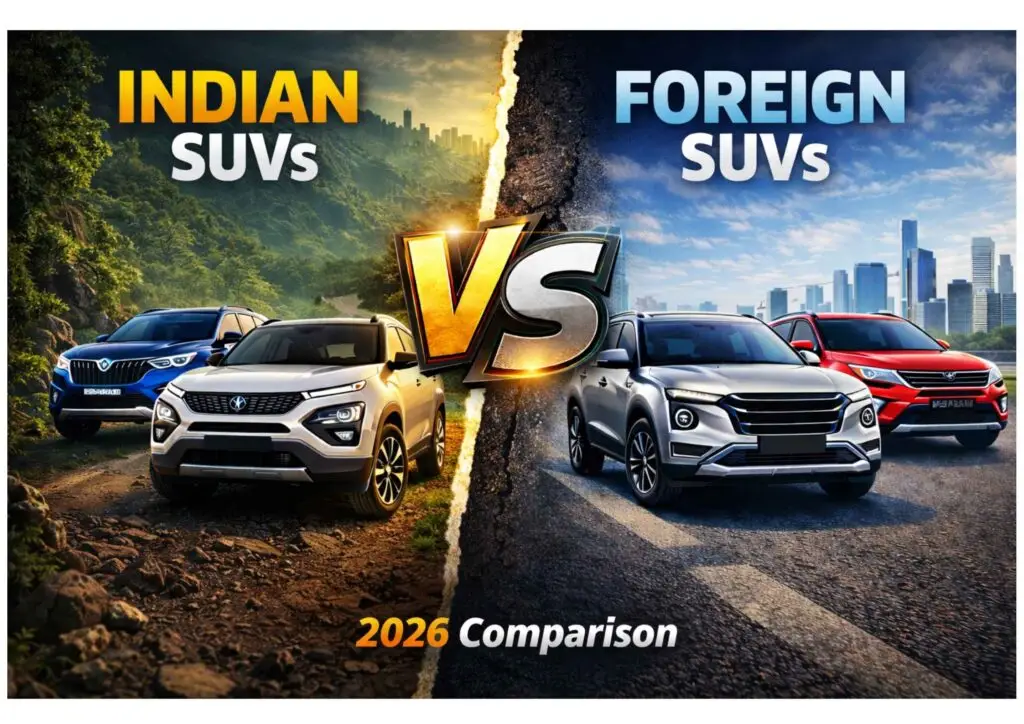
4) The SUV Wave: Tata & Mahindra Have the Home Advantage
India is in an SUV boom. And SUVs demand:
- ground clearance
- power
- road presence
- suspension strength
That’s exactly what Tata and Mahindra are known for. Even if a Hyundai/Kia SUV feels smoother in the city, many Indian buyers want:
✅ “real SUV feel”
not just a “raised hatchback feel.”
5) Safety Focus Is Becoming a Deal Breaker
Safety is no longer optional in India. Today, families ask:
- “How many airbags?”
- “Is it stable on highways?”
- “Does it feel strong?”
And a key reason Tata & Mahindra became strong choices is how Indian buyers increasingly value:
✅ body structure confidence
✅ safety-focused marketing + awareness
(Important honesty note: safety depends on specific model + variant. So always verify ratings of the exact variant.)
6) The EV Factor: India Wants EVs — But at Indian Prices
Many foreign EVs ( Electric Vehicles) in India are:
- expensive
- limited in service availability
- premium-segment focused
Indian brands are pushing the EV story where it matters most:
✅ mass adoption and affordability
This is a big reason Tata’s EV strategy helped reshape market perception:
Indian brands can build global technology at Indian pricing.
7) जियोपॉलिटिक्स और सप्लाई चेन: ये सिर्फ कार नहीं, स्ट्रैटेजी है
In 2026, cars are no longer just automobiles. They’re connected to:
- trade wars
- tariffs sanctions
- shipping disruptions
- supply chain risk
अगर भारत की auto manufacturing localized होती है, तो फायदा:
✅ global shocks का effect कम
✅ domestic manufacturing मजबूत
✅ भारत की bargaining power मजबूत
यानी “Buy Indian” सिर्फ emotion नहीं—pure economics भी है।
Here’s a quote that captures this “roots + pride + progress” mindset well:
“Never forget your roots, and always be proud of where you come from.” — Ratan Tata
हैरान कर देने वाला Export Fact: भारतीय गाड़ियाँ अब Global हो रही हैं
बहुत लोग अभी भी सोचते हैं— “Indian cars सिर्फ India के लिए हैं।”
लेकिन reality ये है: भारत के Passenger Vehicle exports (cars + SUVs + MPVs) तेज़ी से बढ़ रहे हैं।
- FY 2023–24: 6.72 लाख यूनिट
- FY 2024–25: 7.70 लाख यूनिट
और Maruti Suzuki ने 2025 में:
✅ 3,95,000 गाड़ियाँ export कीं
✅ और reportedly 100+ देशों में भेजीं
✅ मतलब साफ है: देसी गाड़ियाँ सिर्फ देसी नहीं रहीं — global products बन रही हैं।
इससे trust बढ़ता है क्योंकि:
- global compliance से quality benchmark ऊपर जाता है
- exports से manufacturing maturity बढ़ती है
- India धीरे-धीरे global auto hub बन रहा है
अंतिम निष्कर्ष: 2026 में “देसी” सिर्फ विकल्प नहीं… स्मार्ट चॉइस है
अगर आप 2026 में अभी भी सोच रहे हैं: 👉 “Foreign हमेशा बेहतर होता है” तो आप market का biggest shift miss कर रहे हैं। आज:
✅ देसी गाड़ियाँ premium feel देती हैं
✅ SUV segment में Indian road advantage है
✅ ownership cost low है
✅ exports global trust prove कर रहे हैं
Indian cars अब alternative नहीं हैं — बहुत से cases में best practical choice हैं। Aap ko apne budget ke according har segment ki car ek luxury interior main mil sakti hai.
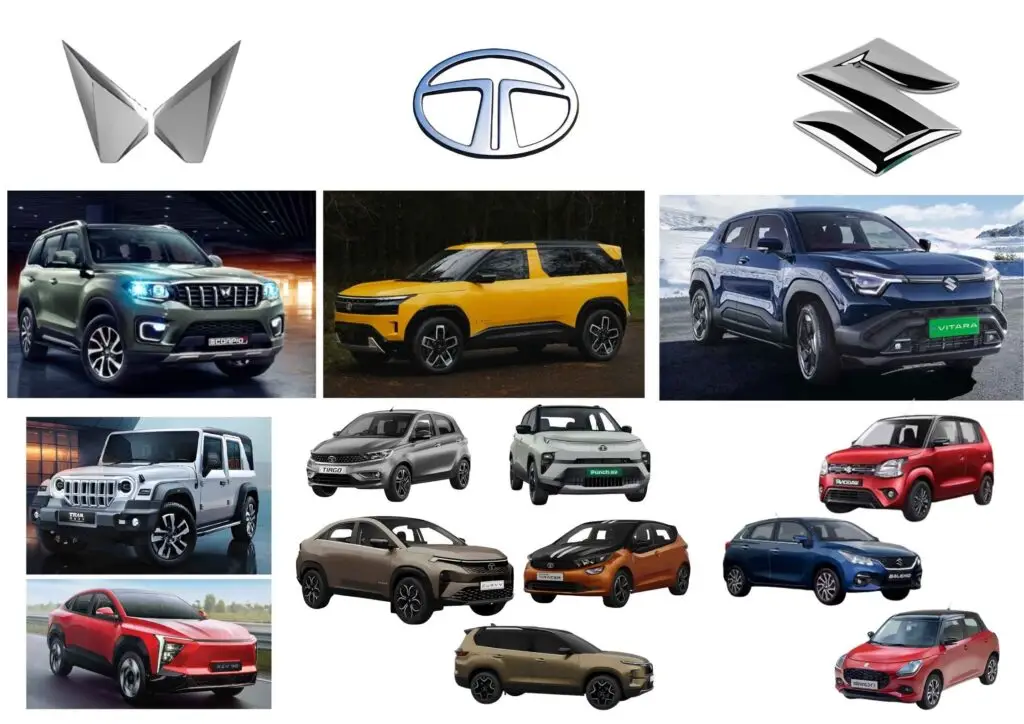
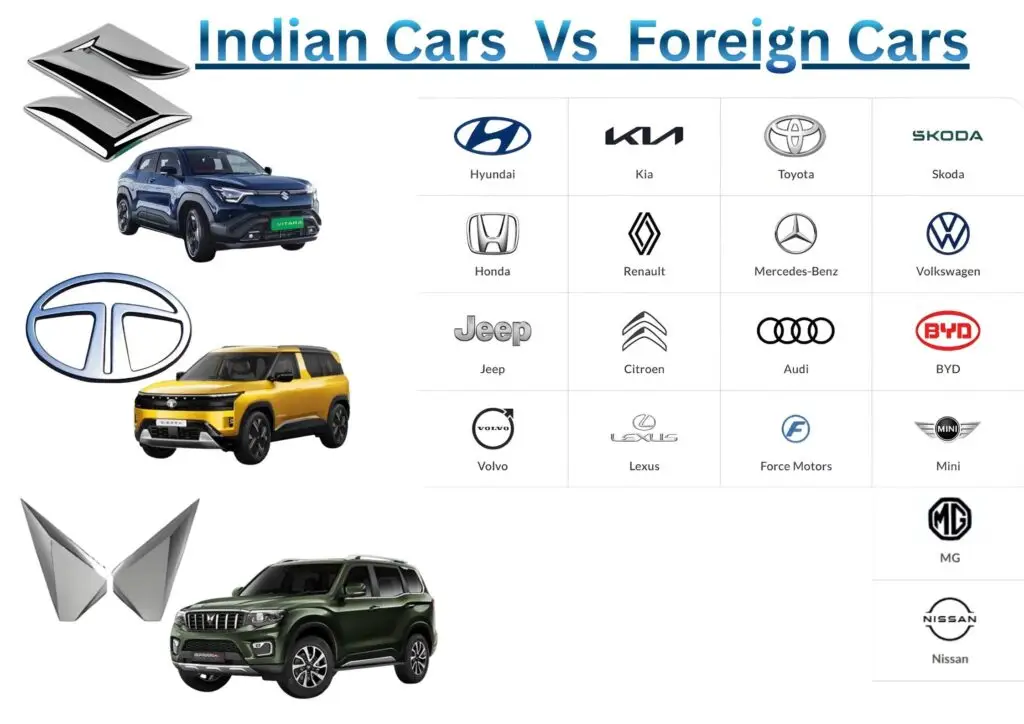
Tata, Mahindra and Maruti are leading India’s indigenous auto rise.
Indian SUVs vs Foreign SUVs (Overall) — Comparison Table
| Factor (SUV ownership) | Indian SUVs (Tata / Mahindra / Maruti) | Foreign SUVs (Hyundai / Kia / Toyota etc.) | Advantage |
|---|---|---|---|
| Ground clearance & rough-road readiness | Often tuned for bad roads, higher SUV stance | Some models are city-focused | India |
| Suspension durability | Built for Indian conditions | Softer setups on some models | India |
| City ride comfort | Can feel firm in some SUVs | Generally smoother ride in city | Foreign/India |
| Engine refinement / smoothness | Improved, but varies model-wise | Often more refined and silent | Foreign/India |
| Feature value per price | Often more features at same price | Features sometimes priced higher | India |
| Interior fit-finish consistency | Improving fast but inconsistent | More consistent premium finish | Foreign/India |
| Highway stability & confidence | Very strong in many Tata/Mahindra SUVs | Strong too, especially Korean/European | Depends |
| Maintenance / spare part cost | Usually lower | Often higher (esp. European brands) | India |
| Service network reach (small cities) | Very strong (Maruti best) | Strong in metros, mixed outside | India |
| Reliability reputation | Strong for Maruti; varies by brand | Toyota/Honda strongest reputation | Foreign/India |
| Hybrid technology | Limited | Toyota leads strongly | Foreign/India |
| EV affordability | More mass-market options | Often premium pricing | India |
| Resale value (used market) | Strong in Maruti; improving for others | Toyota strong; Korean strong in cities | Depends |
FAQ :
Q1. 2026 में देसी कार बेहतर है या विदेशी?
कई segments में देसी cars बेहतर value, road suitability और ownership cost देती हैं। विदेशी brands refinement और कुछ tech segments में strong हो सकते हैं।
Q2. Tata/Mahindra/Maruti क्यों popular हो रही हैं?
क्योंकि ये premium feel, SUV road presence, Indian road tuning और बेहतर ownership cost देती हैं।
Q3. क्या Indian cars विदेशों में भी जा रही हैं?
हां। Passenger vehicle exports 6.72 लाख से 7.70 लाख तक बढ़े हैं, और Maruti ने 2025 में 3.95 लाख exports किए हैं।
You can read it in complete english also: Indian Cars vs Foreign Cars in 2026: Why Tata, Mahindra & Maruti Are Winning